Process

Structure makes room for intuition.

The same sequence underlies each painting. It gives Baylis a route back when the work becomes uncertain and lets him concentrate on one decision at a time.

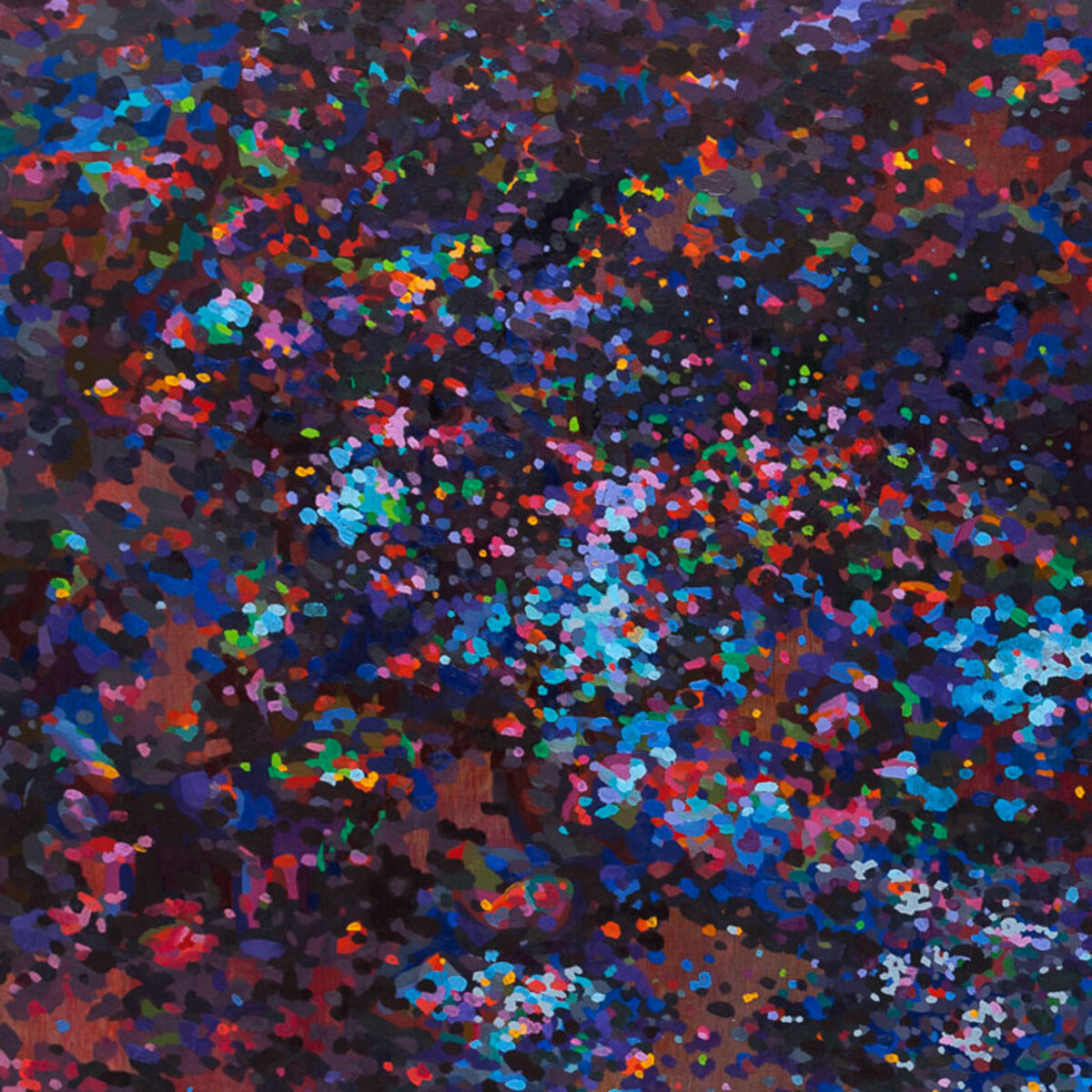
Finished-surface detail of Relative Articulation with a dark upper field, blue and pink clusters, and small red marks
Finished-surface detail of Relative Articulation.

Method

Working sequence

Ten stages, one painting.

Every chapter follows the same physical order. The images show only the finished surface of Relative Articulation, not earlier stages of its making.

  1. Chapter 01 / 04

    Support

    1. Stage 01

      Staining and Bleaching the Panel

      Baylis begins with quarter-inch Baltic birch. He applies water conditioner, sands it if needed, then stains and bleaches the panel. Once dry, three transparent-gesso layers prepare the surface while allowing the grain to remain visible.

    2. Stage 02

      Layers of Transparent Glazes

      Five full-surface glazes combine cold wax medium, Galkyd, mineral spirits, and a trace of transparent oil colour. Each layer dries for about one week.
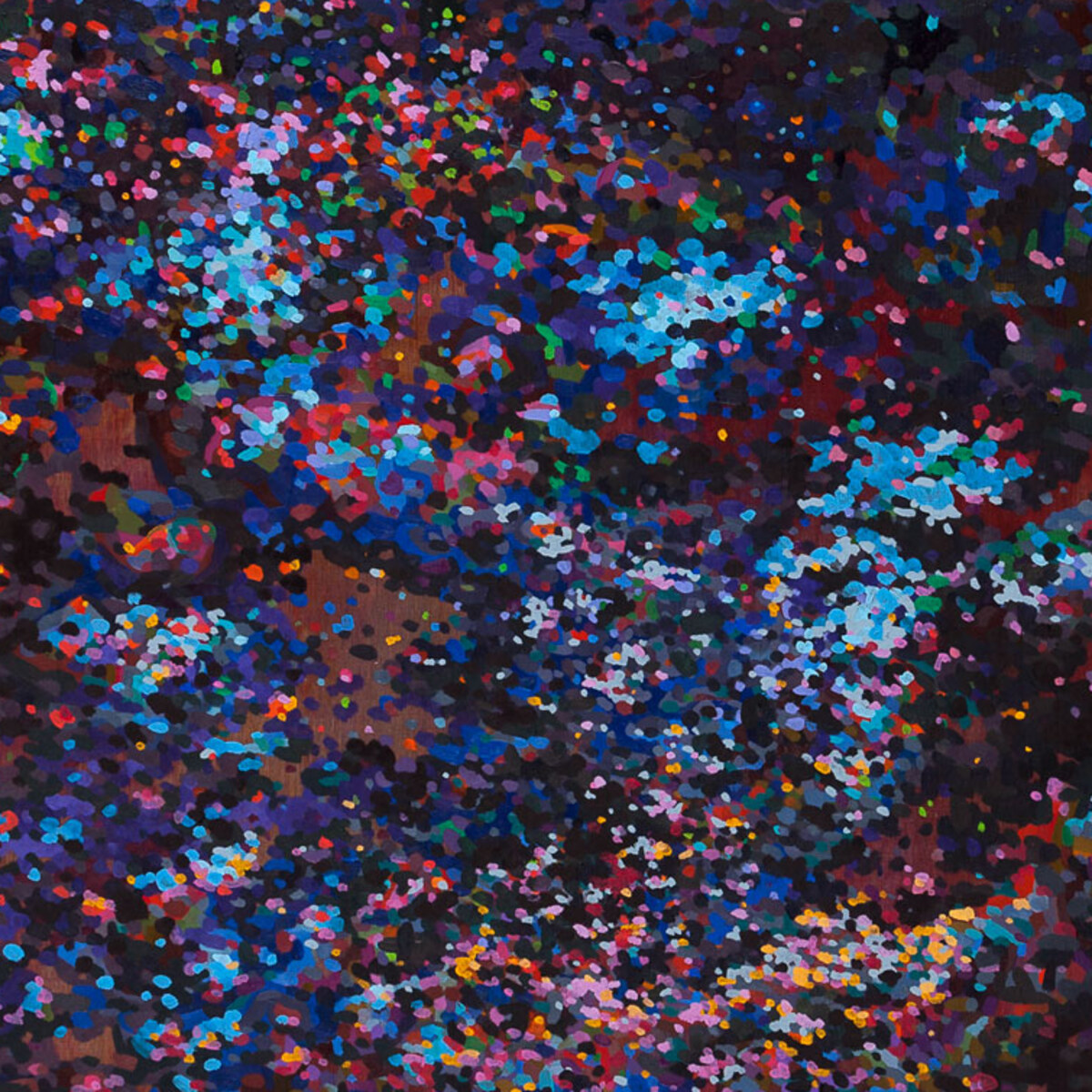
    Finished-surface detail of Relative Articulation with light blue and white clusters among dark blue, black, red, and pink marks
    Finished-surface detail of Relative Articulation.
  2. Chapter 02 / 04

    Build

    1. Stage 03

      Large Brushstrokes

      With the largest brushes, Baylis blocks broad abstract shapes, establishing light areas and warm and cool relationships. Every mark is intentional.

    2. Stage 04

      More Layers of Glaze

      Five further full-surface glazes bring the total to ten, building depth and subtle shifts in colour.

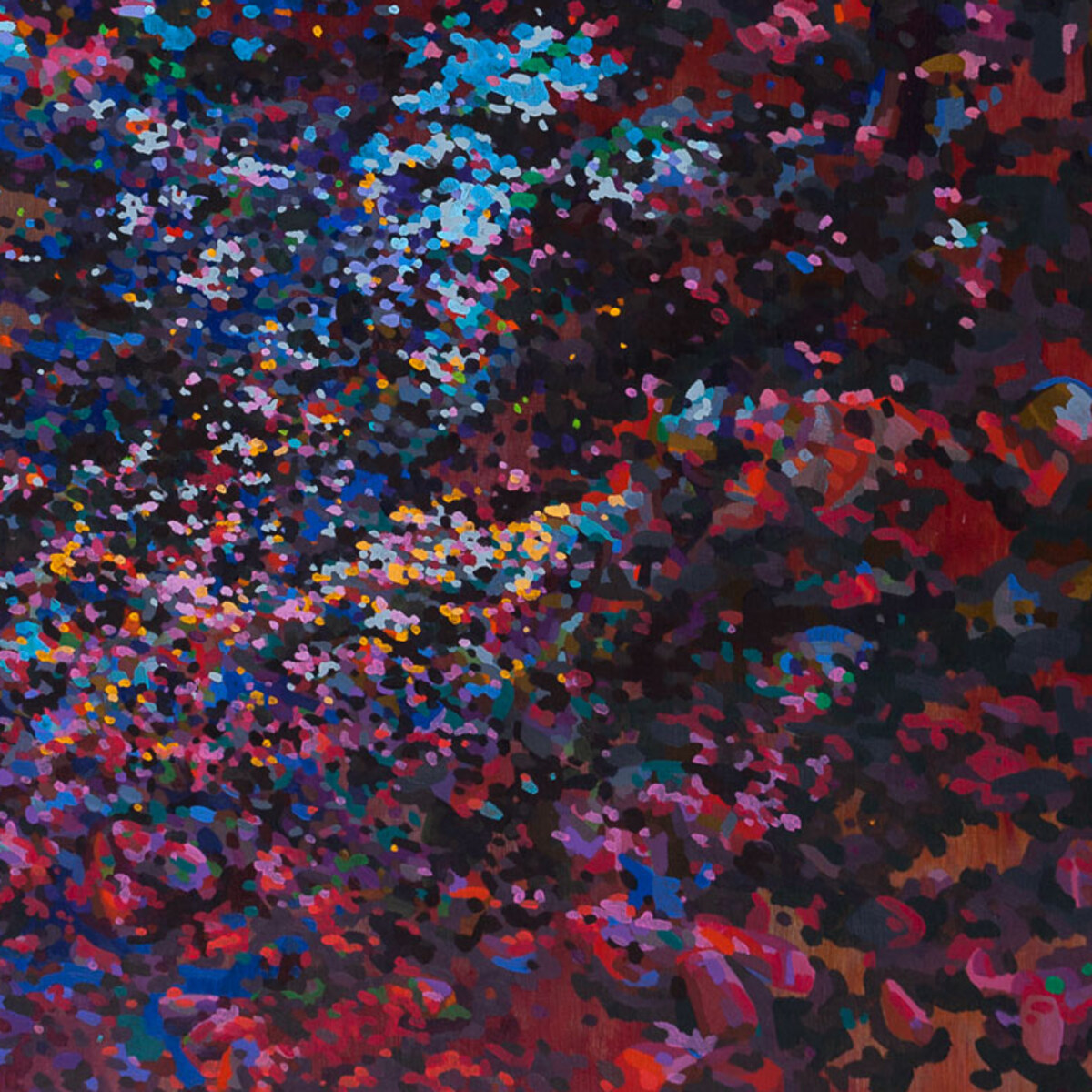
    Finished-surface detail of Relative Articulation with black and dark blue marks and bright blue, pink, and red accents
    Finished-surface detail of Relative Articulation.
  3. Chapter 03 / 04

    Rebuild

    1. Stage 05

      Colorful Brushstrokes

      Medium brushes add the brightest saturated colour. These marks become reference points for later adjustments.

    2. Stage 06

      Establishing Color Harmony

      Baylis continually adjusts and responds to the colour relationships across the whole composition.

    3. Stage 07

      More Brushstrokes

      A range of brush sizes adds further layered marks across the painting.

    4. Stage 08

      Add in Grays

      Greys mixed from complementary colours are placed over brighter marks to tie the colours together.

    Finished-surface detail of Relative Articulation with brown ground visible between black, blue, green, and red marks
    Finished-surface detail of Relative Articulation.
  4. Chapter 04 / 04

    Resolve

    1. Stage 09

      Final Highlights

      The final highlights are made with the smallest brush, predominantly in titanium white with traces of colour.

    2. Stage 10

      Finished Artwork

      Each painting is both a single image and a field of individual marks. The full process takes about six months.

    Finished-surface detail of Relative Articulation with dense dark blue and black marks crossed by light blue and pink clusters
    Finished-surface detail of Relative Articulation.
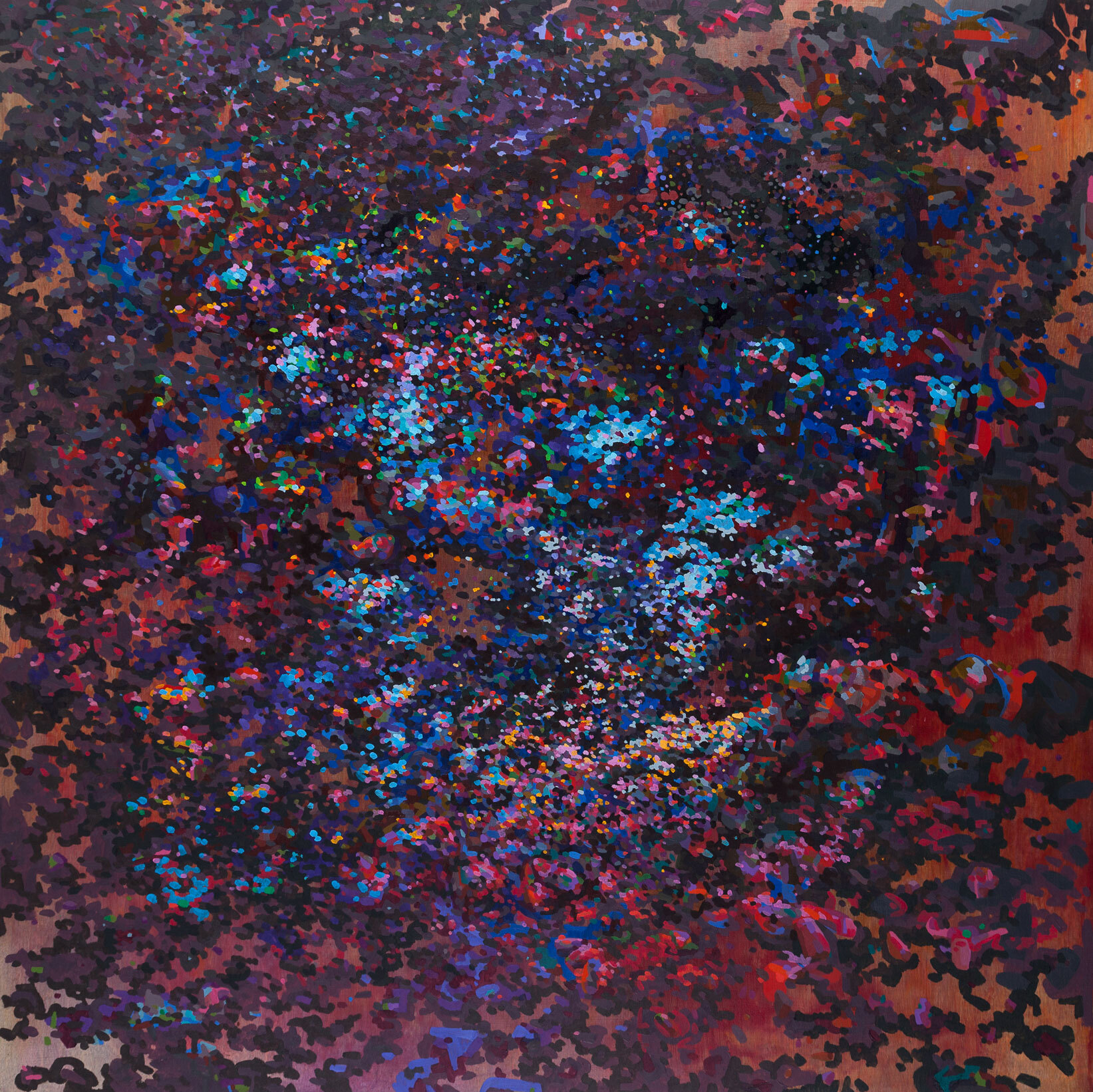
Complete painting, Relative Articulation by Steve Baylis
Complete painting, Relative Articulation.

Complete artwork

Relative Articulation

Oil and cold wax on Baltic birch panel. Series 1.

View artwork record